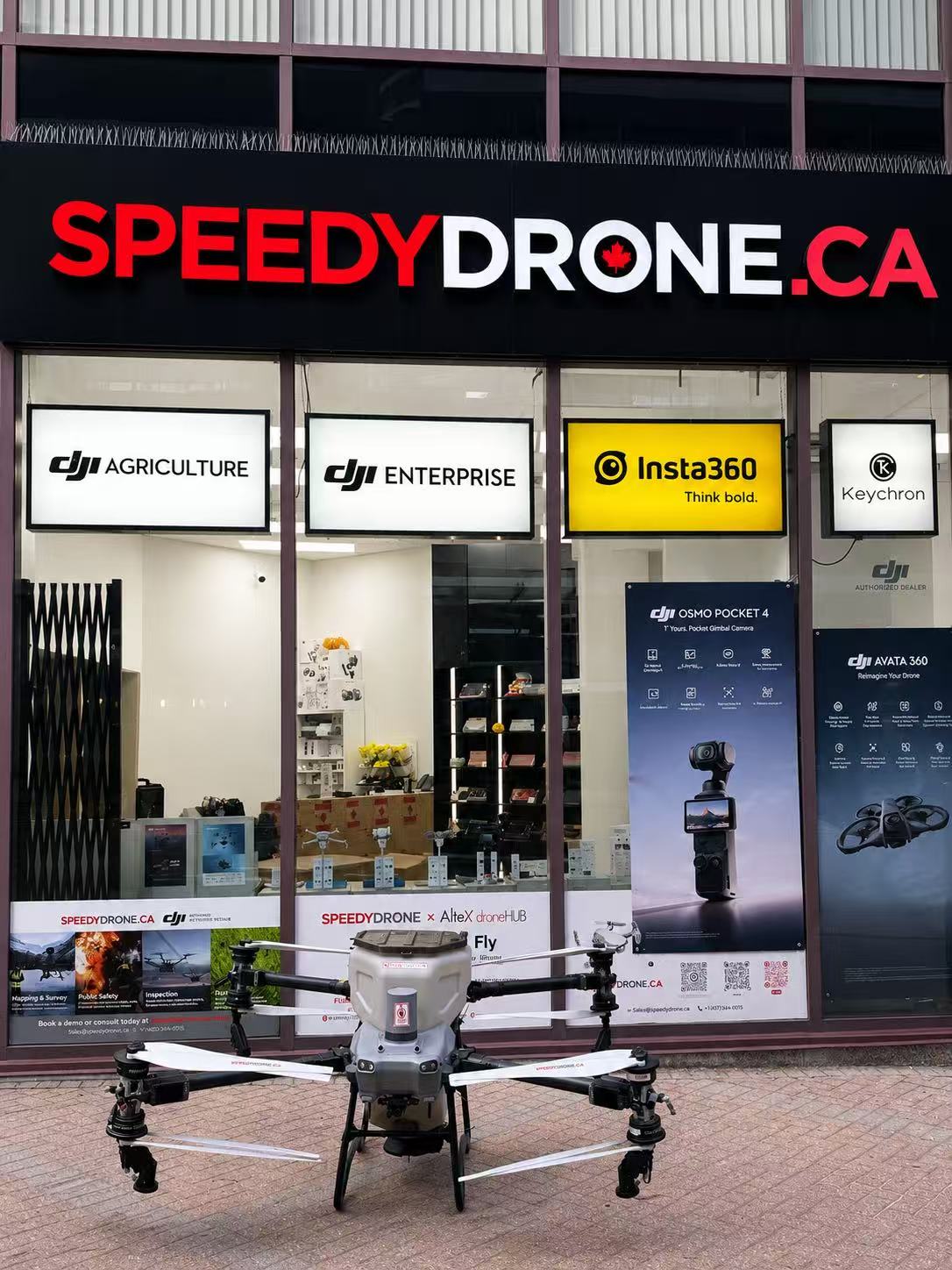
Preparing an agricultural drone deployment in Canada
A practical preparation guide covering the task, field access, people, equipment, data and operation-specific checks before a quote.
1. Describe the production task
State the crop, purpose, material or information required, target area and working window. Use acres or hectares and label the unit. Separate the total farm area from the area involved in the task. If the scale or date is still uncertain, record what needs to be resolved.
2. Inventory the field setup
List existing aircraft, batteries, chargers, transport, water or material-handling equipment and available power. Describe access to the operating area and any constraints on loading or relocation. Avoid assuming that an aircraft package covers every ground requirement.
3. Identify people and information
Assign a contact for the equipment decision and identify who will operate, prepare materials and review records. Note experience and training needs. For mapping, identify the field boundaries, software, intended outputs and the person responsible for agronomic interpretation. Data collection is optional when the task does not need it.
4. Check requirements for the specific operation
Reviewed 20 September 2026. Check the current official sources below for each proposed operation.
Product and intended use
Health Canada’s SPN2026-02, published 30 June 2026, permits eligible products registered for aerial application to be applied by RPAS, subject to the label and policy. Check the crop, use, dose, droplets and restrictions. Do not reduce spray volume below the labelled aerial minimum; use the applicable conventional rotary-aircraft buffers. Products prohibiting aerial or RPAS application are excluded. Required closed-cab protection also needs an RPAS equivalent.
Aircraft and operation
Transport Canada assesses the aircraft’s operating weight and safety features, flight method and location. Medium drones weigh more than 25 kg and no more than 150 kg; their operations are Advanced or beyond. Confirm registration, pilot privileges, the relevant safety assurance declarations and airspace permissions. Agricultural use alone does not determine the category or qualifications.
Province, people and field preparation
Check provincial or territorial pesticide training, licences and permits separately from pilot qualifications. Follow required PPE and handling controls.
The mixer must be a different person from the pilot. The pilot may load another person’s premixed pesticide only when the label permits it and a closed transfer system is used. Otherwise, loading is also separate.
Equipment must be properly calibrated. Health Canada recommends checking actual swath width before first application and whenever operating parameters change. Define responsibility for agronomic decisions, equipment preparation, application and records before scheduling.
5. Send a usable configuration brief
Include the location, task, area, timing, existing equipment and preferred contact language. Indicate whether you want to buy equipment, prepare an existing system, arrange training or discuss contracted work. Share sensitive field files only through an agreed direct channel.
Use equipment deployment to agree scope and training to prepare the people involved. Configuration, scheduling and service availability are confirmed for the project.